Shadow
Cast up in Ankara for reasons of the kind by which unforeseen winds wrench a ship from its course, seize its helm and fling it onto a shore crowded with jagged rocks - that rugged city whose hollows, when all is said and done, far outnumber its rare stretches of level ground - I left it at the first opportunity my accrued standing as a civil servant afforded me and took refuge in a seaside town, and the school where I took up my post there stood right beside the coast road, near enough to the sea to let me leave the gloom of the capital behind in no time, and steeped in the sound of waves that now and then rose and swelled.
 amnat30 / Shutterstock
Cast up in Ankara for reasons of the kind by which unforeseen winds wrench a ship from its course, seize its helm and fling it onto a shore crowded with jagged rocks — that rugged city whose hollows, when all is said and done, far outnumber its rare stretches of level ground — I left it at the first opportunity my accrued standing as a civil servant afforded me and took refuge in a seaside town, and the school where I took up my post there stood right beside the coast road, near enough to the sea to let me leave the gloom of the capital behind in no time, and steeped in the sound of waves that now and then rose and swelled.
Since my appointment fell in the summer holidays and I was a stranger to the neighbourhood, I had few pursuits to occupy me and time in abundance. I liked seeing the school in that empty, quiet state. Besides, especially in the evenings, I would drop by the school at that hour to watch the sun set into the sea; I would sit in the gazebo in its garden facing the water, sometimes with a book in my hand, sometimes simply losing myself in the sea and in the spectacle of the dusk the sun slowly shaped on the horizon, and I would savour the relief of being able to drift away from time and place as well as from myself. The hours in which I felt this relief at its most intense were the evenings accompanied by a full moon. On those evenings, when sea and air were as serene and still as could be and the waters sank into a bottomless darkness, the moment the moon rose over the horizon the surface of the sea would be covered with glittering phosphorescence, and through this primordial union of light and water, repeated since time immemorial and the inspiration for so many songs and poems, one felt one had passed into the sweet clime of another realm.
This went on until the opening week of school, and so I came to know the school and its surroundings before I had even met my fellow teachers. On the first day of school — though I had not noticed her at all during the opening ceremony — when, after the bell that marked the end of the first lesson, I made my way to the staff room, curious to meet my new colleagues, the first face to catch my eye was hers. Perched with a tentative shyness on one of the armchairs along the edge of the staff room, which could be called spacious given how few teachers there were, and looking around, probably prompted by the same curiosity, this sweet face I glimpsed from across the room carried me straight back to my middle-school years.
Those who have known it will understand: boarding schools hold a place apart in a person’s mind, and leave a deep mark there. Above all for those who went through the experience in their primary and middle-school years, when our minds are far purer and vivid enough to carry every memory to the end of our days, the first memories that rise up at the word “school” always belong to boarding school.
Halise was one of the quietest and shyest girls in our class. If one considers that regional boarding schools were built chiefly in rural areas where settlements were scattered or economic means were limited, it is possible to say that this shyness of Halise’s, besides being a product of her natural temperament, had been further nourished and deepened by the milieu into which she was born.
A character as far removed as could be from the exuberant, restless ways of early adolescence that go with middle-school age, Halise — compared with the rest of us, who waited impatiently for the teacher to leave the classroom so that we could leap from our seats at the break bell and race into the corridors — would go on sitting at her desk as silent and motionless as one of the classroom’s fixed fittings, a wall noticeboard, say, or a framed copy of the İstiklal Marşı, and would spend the breaks in the same silence she kept in lessons. On the rare occasions when she did stand up, she walked with slow, uneasy movements, as though surrounded by breakable things and liable at any moment to knock something over and smash it, and with her hands held out in front of her in the same shyness, reaching forward like a protective shield to stop the first rascal who might run into her, she would leave the classroom; and most of the time, so as not to be caught up in the commotion when the lesson bell rang, she would come back to the classroom early while all was still calm and, with the same uneasy, timid movements, return to her seat.
In boarding schools one lines up far more often than in other schools. At morning assembly, going down to the dining hall, going up to evening study, heading to the dormitory, or whenever any out-of-the-ordinary activity took place, we always moved in class-line formation. In these lines the girls always stood at the front. Though at that age I saw this as a privilege reserved for the girls, far from objecting, I was secretly pleased with this discrimination, since it gave me ample opportunity to observe Halise. In these orderly lines, too, Halise was the same Halise. Silently and with the same shyness she followed the steps of the classmate in front of her, never showing the slightest irregularity that might break the line. With the smile that lent sweetness to her face, with her clear and innocent features, she seemed as though, whatever her age, she would never abandon her shy-child self, would never part from that pure childhood.
Halise cast off this shyness only at the school shows. At every show in which pupils were to sing songs and folk songs, I would see Halise on stage with an ease that made one forget altogether the image I have touched on briefly above. The same calm, pure, smiling face remained, but she would step onto the stage in the security of knowing that no one would come near her, that nothing would bump into her and do her harm, and she would always sing the same folk song.
Why should I not weep, why should I laugh
My wild heart has bound itself to a love
To a beloved sweet of soul and sweet of word
Her glance an arrow, her brow drawn into a bow.
Halise sang this folk song in a voice so pure, so clear and so moving that she was given a turn on stage at almost every programme, and she would make the same song all the more moving, deepening the sorrow inherent in its natural harmony with a sorrow of her own that took the place of her shyness and gathered in her voice. And just as with the privilege of being at the front of the line, I greeted her taking the stage almost every time without envy and with a secret joy. Being given a place on stage myself now and then, and singing folk songs on the same stage as her, drew me that much closer to her and deepened my secret joy all the more.
I remember experiencing this feeling many times at the school shows, which took place far more often at our boarding school than at other schools and went on throughout middle school; yet for all my interest, for all my secret joys, I never managed to grow close to Halise. What is more, I do not remember ever defining my feelings for her with the word “love”. I would dearly have liked to have seen this emotional closeness and interest, if only within myself, as the passion of early youth — to have lived it as a passion, if only within myself.
Only much later, in my young manhood, when it wrapped itself around me, this time in all its intensity, did it become possible to understand this passion, which, like so many village children, struck me tongueless and lipless whenever passion was in question. Though many passions left me — passions lived far more deeply and shatteringly than this one — Halise always stayed with me, in the form of that unlived, unfinished, unnamed passion that perhaps remained inside me precisely because it was never lived.
That is why, at times, a pair of eyes, a glance, a clear voice, the uneasy gait of a young girl, or any womanly air kneaded through and through with sorrow takes hold of me and brings me straight to the image of Halise, faint and growing distinct only insofar as I can descend into the depths of the past.
These moments are strange, in truth. That a glance, a manner or a bearing of some young girl I do not know, know nothing about, about whose life I could not venture the least idea — or even of any woman my own age, of the same sex as the Halise whose image inside me has grown old along with me — should open, as if with a magic key, the door to these unfinished dreams of my past; that all those memories should be poured over me with an intensity that seems to come from having been shut away so long; this deluge of feeling set off by so tiny a cause — all of it is very strange. Whether my being caught in this deluge of emotion, which recurs from time to time as though bound to some periodic calendar, springs from a sense of deprivation that my nature has never managed to overcome, so that I seize on a pair of sorrowful eyes or a tender womanly gesture as a pretext — that, too, is hard for me to determine.
Yet in spite of all my incompleteness, in spite of being condemned to the misty memories of my past with the privation of knowing that it can never be lived again, I have always loved remembering Halise. It hardly seems possible to put this down to any single cause. It is something like loving my childhood, loving the purity and the carefree heart of my childhood — or like loving with a childlike innocence, with a pure love far removed from all craving.
There could, of course, be no question of my feeling and voicing all these emotions about Halise in any depth with the flightiness of childhood or early youth. But today I am all but certain that all these associations of character that come alive in my mind, my imaginings of her, the states of soul I am trying to portray and even, to be more concrete, her manner and bearing, continue to live on vividly and powerfully in Halise’s nature. What is more, I know her well enough that it would not surprise me in the least to see her face, grown old with me in my mind and now my contemporary — well enough that, with no need for anyone to introduce us, I could approach her with a gentleness that would not unsettle her and say, “Hello, Halise.”
There is another possibility, and perhaps I ought to state it as a confession: it may also be said that, over the years, in a deluge of feeling that swells from time to time and, as it were, in the depths of my consciousness, I have built the real, unfinished Halise into an imagined character all by myself, and have tried to complete that unfinished love with my own imaginings. Yes, perhaps many of the memories I believe I have of Halise are the result of the longing of human nature, which cannot abide the unfinished, to soothe, through some necessary and instinctive inclination, the ache of a deprivation that will last a lifetime.
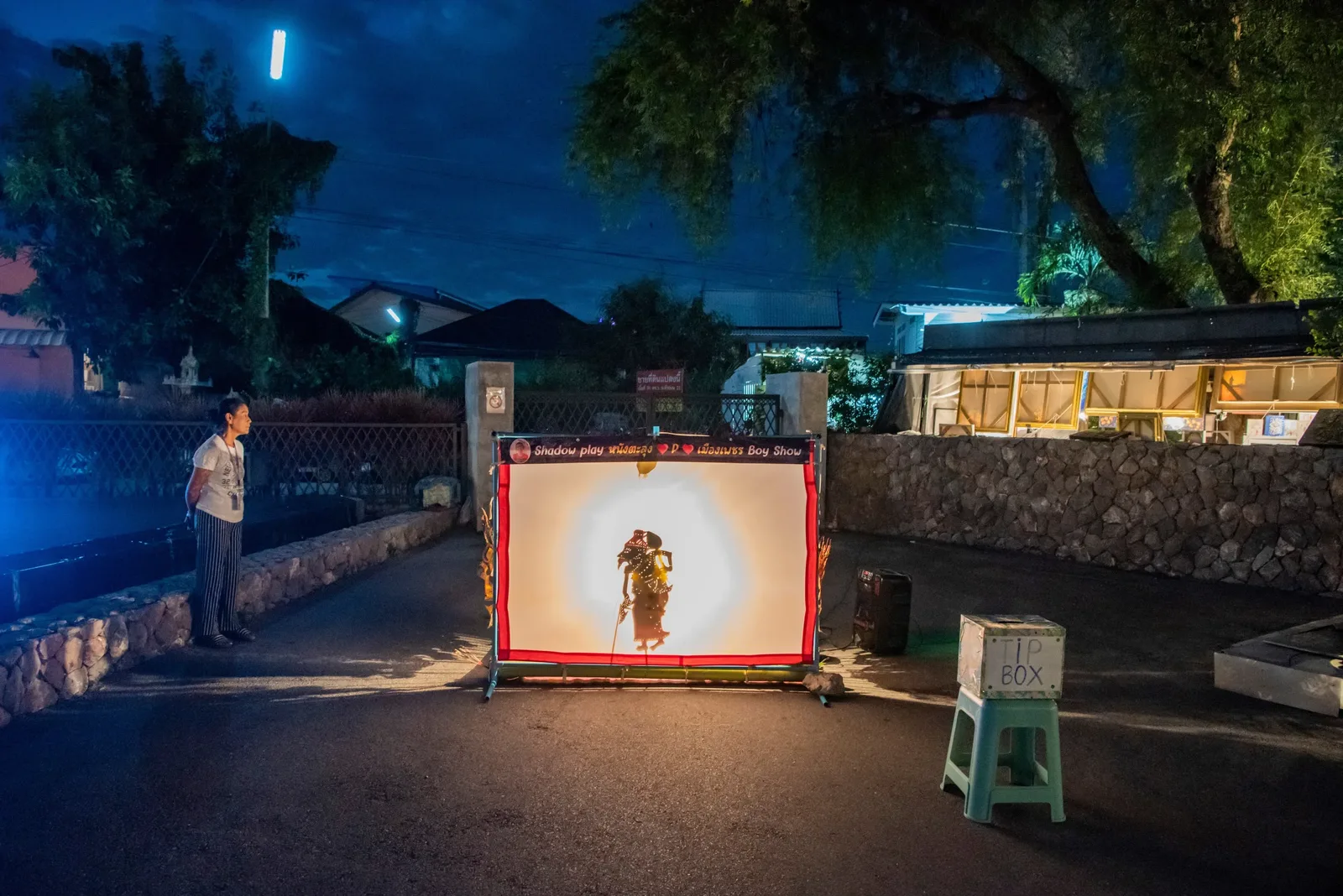
It would also be possible to describe this as that famous shadow play in which beams of light that have left their source behind, when cast upon a screen, create imaginary figures quite unlike the real ones.
This story received the Jury’s Special Award in the Tahta Gemi International Short Story Competition (2026). Translated from the Turkish.
COMMENTS
No comments yet. Be the first to comment.