The Shadow of the Main Gate
Under the July sun, the heat of the asphalt would turn the soles of our rubber shoes soft as dough.
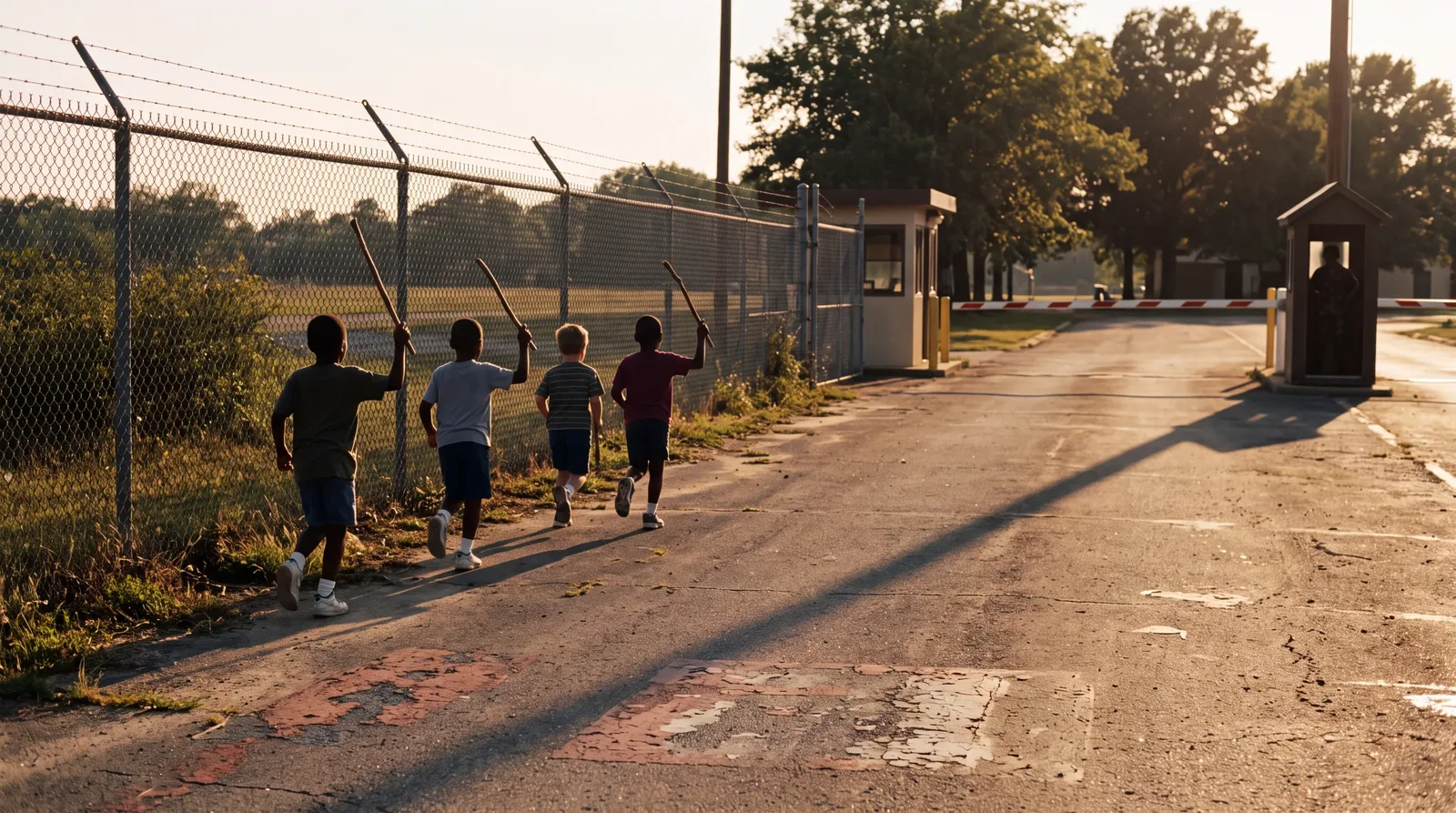 Image: AI-generated
Under the July sun, the heat of the asphalt would turn the soles of our rubber shoes soft as dough. The moment we burst out into the street, the choicest members of my gang and I would set off running for the canteen, jostling front and back. That smell of wet concrete and dust that stung our nostrils hung in the air, and our shrieks rang off the high walls of the compound. Our one aim was to reach the canteen as fast as we could, buy a packet of crisps, wipe the dust off the ridged plastic tazo hidden at the bottom of the bag on the hem of our T-shirts and hold it up to the sun. At that moment no kingdom in the world could have been richer than ours.
As if pestering the soldiers who stood guard at the Main Gate every single day weren’t enough — those big brothers in whose eyes we could read their longing for home — we would race past rattling the wire fence with the wooden sticks in our hands. They never got cross with us; they would smile from under their steel helmets, and sometimes they would take a single boiled sweet out of a pocket, hold it out to us and stroke our heads in place of the little brothers and sisters they had left behind back home. The youngest soldier in the sentry box — we called him “Tall Ali” — would pull a boiled sweet out of the same pocket every time and tease us: “Just this once more, mind you don’t cheat your brother out of his share.” Their shadow at the Main Gate was an invisible armour over us.
Our daily routine ran like clockwork. From twelve to two was, for us, nothing short of house arrest. Our whole world in those hours was pressing up close to the television, feeling the static on the screen tug at the hairs on our arms, and playing Mario, blowing into the cartridges when they stuck and slotting them back in, or jabbing at the buttons of Tetris. While we sweated it out in front of the screen indoors, our mothers’ comings and goings never faltered either. At Auntie Ayşegül’s, breakfasts that lasted from nine until noon were accompanied by the clink of porcelain cups, and then my mother would start getting the tea ready… When one flat ran out of hobs, nobody asked anybody’s permission: the door across the landing would open a crack and the cooking pot would be set down on the neighbour’s stovetop.
The moment the sun lost its bite, the street was ours again. Bicycle bells, volleyball matches, cut-throat dodgeball… There was a little zoo inside the compound; the geese there would come honking after us whenever they saw us. As my brother Can and his gremlin crew ran about brandishing swords made of tree branches, the geese would follow hard on their heels. When I lost myself in a game, or in the Main Gate, he would still be busy with the lines he had drawn in the dirt. The compound was so big that it even had its own Officers’ Club within its bounds; slipping off there now and then to eat the one-of-a-kind hamburgers the soldiers made with such care was a feast beyond compare for us. Running about the street we would get thirsty and plant ourselves in front of the apartment blocks. We would tip our heads back and call up to whoever’s mother was at the window. Ice-cold jugs of water lowered from the balconies, bread and cheese pressed into our hands, sticky Capri-Suns… And then the mothers’ voices would ring out across the garden: “Feeding time!” Whichever door our feet happened to carry us to at that moment, we would swarm in there and all dig our spoons into the same spread.
But above all this joy there was always a thin ceiling of glass. When the evening games gave way to the night-time soup at Auntie Mine’s, the television on the wooden coffee table in the living room would be switched on and the hour of “the bulletin” would begin. In that instant all the noise in the street was cut off as if with a knife. The newsreader’s voice rising from the television, or the crackle of a radio set from outside… A single piece of news, or a single whisper that might come from our fathers up in the mountains, was enough to freeze all the aunties in that big living room at once and leave every spoon hanging in mid-air. The soup bowl would tremble in Auntie Mine’s hands; Auntie Ayşegül’s fingers would dig into the rim of her cup. A single name, a single word — “m…r”… Before that word could fall into the room, the aunties’ glances would collide. Every evening the same waiting, the same held breath…
Neither I nor the other children in the compound could put a name to this shadow that had settled over us. Every day at half past five in the evening we would stand in front of the military shuttle bus and wait for our fathers to get off. The doors would open, the windows would come down, a few fathers would step off the bus and hug their children… Our fathers never got off. Disappointed, we would turn around and go back to our games. Childhood, after all, soon forgot. I’ll be honest: I don’t remember my father getting off that bus even once. At the earliest he came home once every three months, and each time he brought a Lego set or a robot with him. The moment that box was opened, it was like a holiday in the house. When the fathers came home, the mothers’ clockwork daily routines would stop, and the days were given over entirely to the precious little time they would have with their husbands. On the day the men left for duty, though, all the mothers went into mourning. What they lived through was pure fear. Every evening that fear seeped into the houses drop by drop, and some nights it burst its dams and began to overflow.
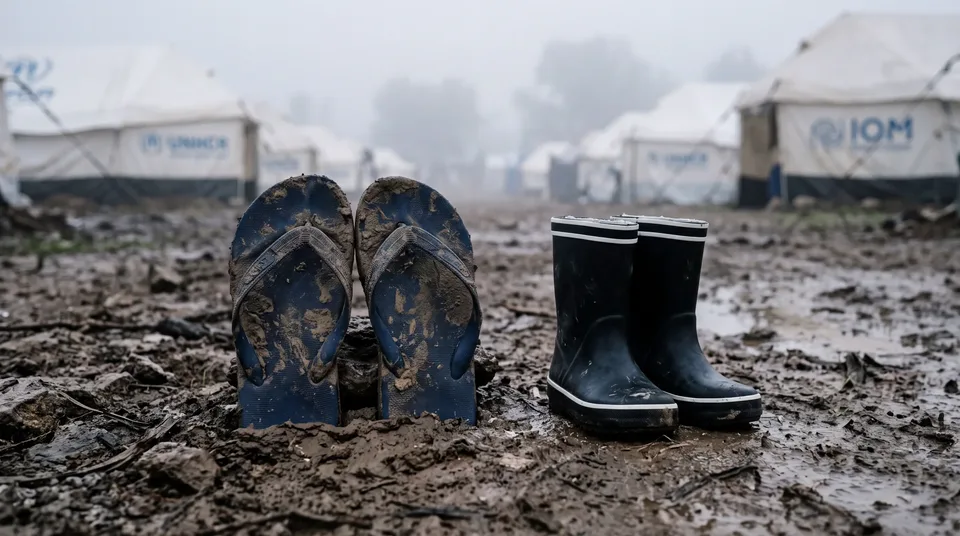
I will never forget it: one night, when everyone was asleep, I woke to the faint sound of sobbing coming from the hallway. My mother was sitting in the middle of the dark living room with my father’s muddy boots, just back from his leave, in her lap. Beside the boots lay that old leather-bound notebook my father left behind every time he went away. We never knew what he wrote in it; we only saw my mother leafing through its pages now and then. She was clutching a wet handkerchief, twisted into knots, in her palm and biting her lips so the sob wouldn’t escape. The whole responsibility of two children, that great loneliness in my father’s absence and the weight of bad news that might come at any moment had all come crashing down on her young shoulders. Yet in the morning it was as if nothing had happened. Taking care not to look herself in the eye in the mirror, she had done her make-up, put up her hair and put on a clean blouse. Only as she put on her lipstick would she pause for a moment and take a deep breath, then go through to the kitchen and call out, with that calm look on her face and in her usual soft voice: “Tea’s ready.” The only trace of the sobbing I had witnessed that night was perhaps a slight puffiness around her eyes; and that, too, she had carefully hidden so that no one would notice.
That night, with my child’s mind, I could not go and put my arms around my mother, but I did understand this much: the high walls of the compound had not been built to shut us off from the outside world, but to protect us from the fears our mothers never let us feel.
I loved climbing trees and falling out of them; with every fall I would tell myself, “I’m strong, like my father.” When we banged our knees on a bicycle pedal and drew blood, the word “Mum” never left our lips. Yet all children run to their mothers when they get hurt, crying “Mum!” Our eyes, though, would slide by reflex to the Main Gate, searching for that camouflaged shadow that would come walking in. Because he wasn’t there with us, because it was his absence that hurt us most, we always cried “Dad!” Sometimes I would hoist Can onto my back and run towards the Main Gate and watch the soldiers smile; it felt as if that smile were protecting the two of us — him above all.
We grew up inside that shadow; both the safest place of our childhood and its greatest fear stood before the same gate. At the end of the day, as we closed our eyes on the next day’s games, the crackle of the television in the living room mingled with the question the mothers whispered as they held one another’s hands: “Whose place are we having tea at tomorrow?” And outside, the shadow of the Main Gate, as always, leaned against the walls of the compound and waited in silence.
This story won second prize in the Tahta Gemi International Short Story Competition (2026). Translated from the Turkish.
COMMENTS
No comments yet. Be the first to comment.