Over a Little Water
I can’t say who started it, but the whole family was having a water fight in our modest flat. My mother was impatiently trying to fill the bowl in her hand from the kitchen tap, turned on full, while with one arm she shielded her ears and face from the water my father was throwing.
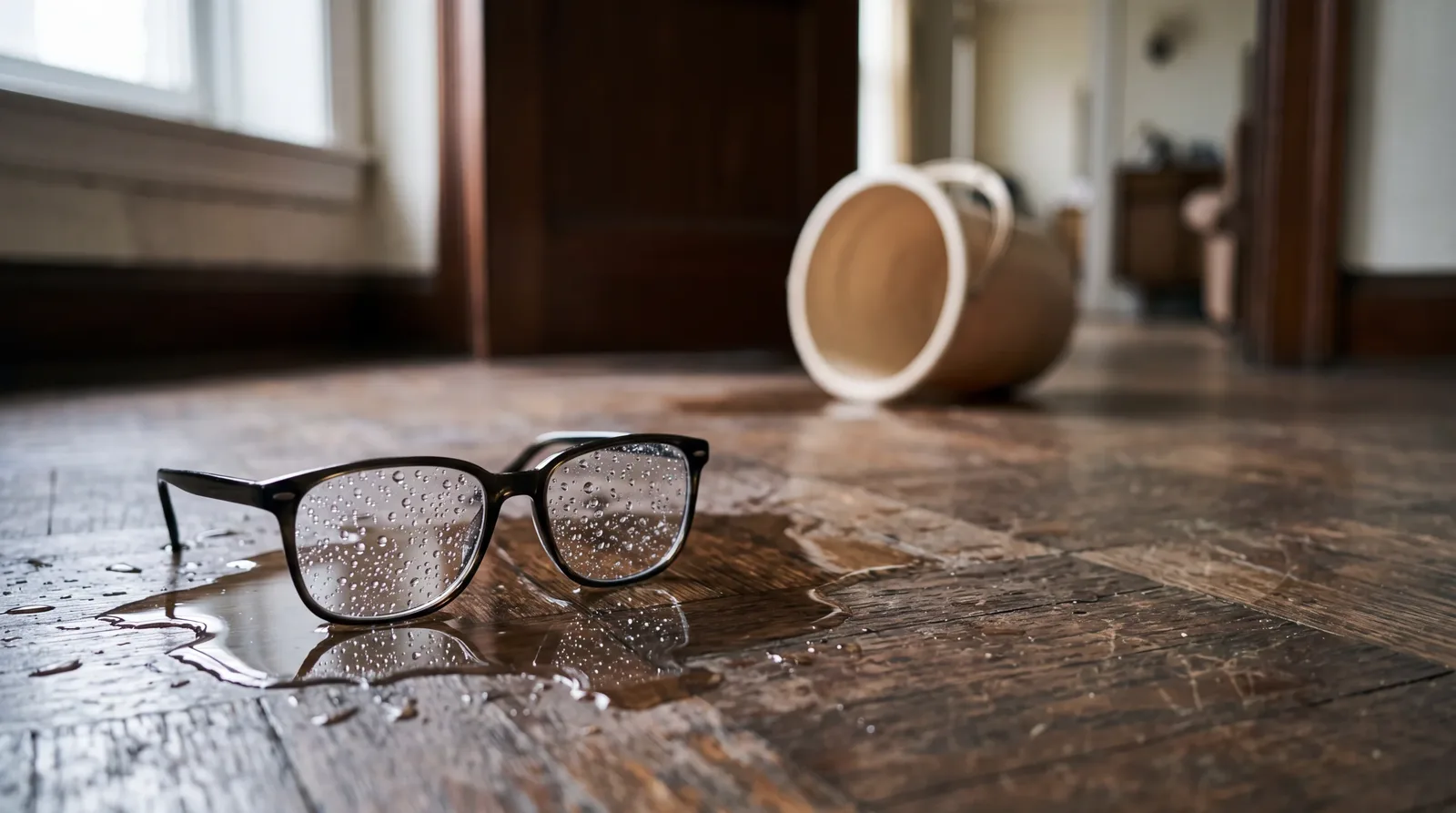 Image: AI-generated
I can’t say who started it, but the whole family was having a water fight in our modest flat. My mother was impatiently trying to fill the bowl in her hand from the kitchen tap, turned on full, while with one arm she shielded her ears and face from the water my father was throwing. With a jug in one hand and a glass in the other, I stood a little way from the kitchen door, watching them. How happy they looked. I filled my glass halfway, but I couldn’t bring myself to go and throw it at either of them.
I looked at my mother: her face had gone so red from laughing that the lovely copper freckles scattered all over it had disappeared. Her eyes, hazel as a rule, turned green whenever they filled with tears. I could see it. They had turned bright green. But not from crying — she had laughed until the tears came, from the happiness my father was giving her, that was why.
I looked at my father: with one hand he was gripping his empty bucket, and with the other he was trying to stop my mother filling hers. Honestly, I could swear he was being clumsy about it on purpose. Because my mother was 1.60 metres tall, and my father was 1.95, a muscular, powerful man. If he’d wanted to, he could have lifted my mother into the air with one hand. But he was playing along, pretending to struggle against her efforts. How could I spoil a scene like that by butting in?
I had bitten down on the whole of my lower lip and was laughing, my lips stretched sideways as far as they would go. Just then my mother saw me, with the jug still in my hand, and through her laughter asked me to help. After a moment’s hesitation I threw my half-glass of water at my father’s back. It left a dark patch on his ironed beige shirt. But he reacted as if I’d lashed his back with a whip. In that moment my mother managed to duck under his arm and escape, her half-full bucket in her hands. She dashed through the door of the living room right behind me, and I followed her without a second’s pause. I went and stood in the middle of the room, but my mother had hidden beside the door, waiting for my father to come in. I felt as if, at that moment, it wasn’t me who was nine years old, but them. I looked at the bucket my mother was clutching tightly in both hands at chest height. She was so focused that she took neither her back off the wall she was leaning against nor her eyes off the door… I could see the pulse her heart sent rippling through her. Even though I couldn’t see inside her bucket, I was sure the water was moving with that ripple. My father was obviously preparing his new arsenal meanwhile, and that was why he hadn’t come straight in after us. I don’t remember how long it went on. Maybe only three minutes, but for me it was long enough to remember my mother’s every expression for the rest of my life.
Just then my father pushed the half-open living-room door with one hand, and the instant he took his first step inside, my mother hurled her water into his face like a guided bomb. And then, just as she was about to let fly a great peal of victorious laughter, my father let fly with his right hand, as huge as the rest of him, across my mother’s left cheek!
My own laughter, which had gone on without a break, froze on my face with that slap. Perhaps the shape of my lips hadn’t changed much, but the pity, fear and anger welling in my eyes showed beyond any doubt that I was no longer happy. I tried to understand: what had happened? Why had my father suddenly got so angry? Was it a joke? No, it wasn’t. It couldn’t possibly be a joke. If it had been, my mother wouldn’t have been standing there, one hand covering the cheek he had struck, as if nailed to the spot.
I looked at my father: he was looking at the floor, searching for something. My eyes swept the floor in the direction he was looking. His glasses had fallen off and were lying there. There were drops of water on the lenses. He bent down and picked them up. Turning to my mother, he said, “You always have to push it till it goes to shit!”
I thought about what that sentence meant; we had never once played together before. Nothing like that moment had ever happened. My mother had always been a measured, respectful woman. Where had that remark come from now? The peace I had felt in the very depths of my soul a moment earlier was gone, and I was engulfed by a pain that reached right into my bones. Why had he hit her? We all knew how much my father valued his things, but should a dropped pair of glasses be answered with a resounding slap? And a woman, at that — in front of her own daughter. It was the first time in my life I had witnessed a moment like that. And yet, before I was born, my father used to beat my mother at least once, or several times, every day. And it didn’t end, the way it had now, with a single slap followed by a sentence declaring she’d had it coming. He had, it seems, all sorts of techniques. For instance: beating her with a hose to leave marks on her body, or filling the bath and trying to drown her… From what I heard, most of this came from my father being an alcoholic and a gambler. But whatever happened, after I was born my father stopped hitting my mother. Just stopped, out of nowhere. As if some monster had come out of him and gone away. Not that this should make anyone think he became a good father from that second on. He had only stopped torturing his wife; he was still an irresponsible, unfeeling man. Strangely enough, everyone who had seen those years of my mother and father’s thought it something of an accomplishment to bring those memories to the surface and talk about them. Whatever happened, my mother had never been able to forget the beatings she had taken, and even if no one ever spoke of them, she never would. Who could forget humiliation like that?
Now, though, it was as if my mother had suddenly remembered, all at once, the pain of the memories she had spent nine years trying to forget. She walked slowly over and sat down on the end of the three-seater sofa in the living room. As she did so she took her hand away from her face, and I could see. The marks of my father’s fingers were there. Clearly, they would stay there a long time. Her face, red from laughing a moment ago, had returned to normal, and her milk-white skin showed beneath her freckles. Her eyes were bright green again, but not from laughing this time. My mother’s eyes turning green had been both my happiest moments and my traumas. Just like today…
This story won third prize in the Tahta Gemi International Short Story Competition (2026). Translated from the Turkish.
COMMENTS
No comments yet. Be the first to comment.