Milk
Pınar came to be known simply as “the Tokatlı’s wife”. Her husband was from Tokat. Where she was from, nobody knew. She must have said at some point, but it had stuck in no one’s mind.
 Anna Nass / Shutterstock
Pınar came to be known simply as “the Tokatlı’s wife”. Her husband was from Tokat. Where she was from, nobody knew. She must have said at some point, but it had stuck in no one’s mind. Pınar was one of those women who, without her husband, might well have just dropped dead on the spot. She could never love anyone in this world as much as she loved him. Not even her love for her children could surpass that love. It didn’t. There was one thing Pınar would never let so much as cross her mind. Last year the Tokatlı had been in a minor traffic accident. Whenever the words “What if he’d died” passed through her mind, she would go hollow inside, the colour would drain from her face, and she would all but faint. She erased that day, and everything it had made her think, from her memory for ever.
The older women in the building said, “You won’t be able to cope.” “Life’s expensive, love, it’s not like it used to be,” they said. She paid them no mind, had the third one too and took it in her arms. Deep down, her husband had wanted a boy. Both of them got their wish. The Tokatlı named the boy who came after two girls “Ege”.
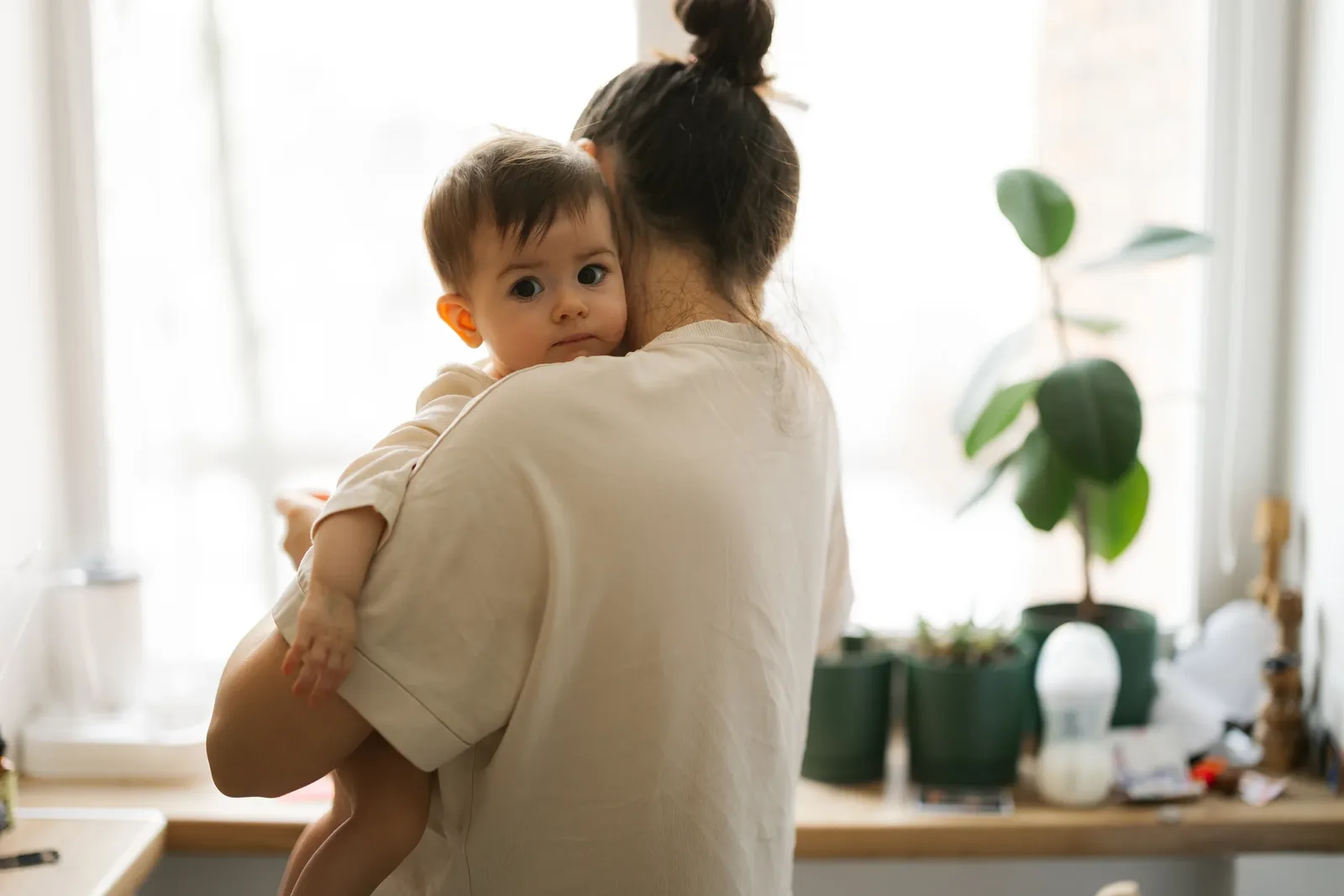
When Jale opened the door to the knock, there stood the Tokatlı’s wife: a goofy smile on her face; in her eyes, the deep pride of having had three children, easy as you like; on one shoulder, the kind of bag women with small babies carry, stuffed with nappies, cream, wet wipes, a spare vest and the like; and in her arms, swaddled tight, Ege. The hostess smiled faintly, noticed that the baby was asleep, and with a quiet, velvety eagerness took Ege in her arms and went through to the sitting room. Sitting down on the sofa bed, she caressed the tiny creature in her lap with her gaze, breathed in his smell.
Pınar sat down on the sofa bed opposite and, after a perfunctory “How are you?”, launched in. The tea came, and was topped up. The girls’ uncle had taken them for the day. She went over the details of her third labour once more, in a whisper. Jale listened attentively. Outside it was overcast İzmir weather: a damp cold, an undecided wind. Pınar is thin, even after the third. No waist, no hips. Between the children on one side and the Tokatlı on the other, her breasts have been drained of every last drop. But she goes on giving birth all the same. Jale watched her neighbour’s face as she talked. An eyelash had fallen onto Pınar’s right cheek. Jale could barely stop herself from picking it off. In the old language, they say, the word for eyelash was Muje. That was what Okan had told her. “Let me read your Muje fortune,” he had said. Whenever one of Jale’s thick black lashes fell onto her cheek, he would take it between two fingers, press, and ask: top or bottom? If you guessed right, you got a wish. That was what was going through Jale’s mind.
In the middle of her story Pınar suddenly remembered. A little louder than a whisper, wary of waking the sleeping Ege, she said, “God grant me some sense. I have to pop into the branch on the corner, abla, I’ll run there and back,” and got to her feet. “After the man reminded me so many times.” She looked at Ege. Seven-month-old Ege was asleep in his pushchair. “Abla, he’s hungry, but Ege won’t wake up just yet,” she said. She had no worries where Jale was concerned. Ege stayed with her now and then anyway. They tiptoed into the hall. Pınar threw on her coat and went downstairs. Jale gently pushed the door to and eased the latch silently into place. Without a sound she topped up her tea and went into the sitting room.
She sank down onto the settee by the pushchair, careful not to jolt it. She and Ege were left alone together. She sipped her tea without slurping. At the corners of Ege’s pink lips lay fresh white traces of leftover milk. His eyes were deep in an easy sleep. How many babies had been born and grown up in this building now… The Konyalı’s daughter-in-law had just given birth when they moved in here. The girl started high school this year. Gülümser’s boy was going to primary school.
She sighed. Back then she had pinned her hopes on IVF. They tried again and again; it didn’t work. They gave up. She wanted to touch Ege. She was afraid of waking him. It would take Pınar fifteen, twenty minutes there and back. She sipped her tea. She rose slowly from the settee. She bent over the pushchair. She drew that mingled, magical smell — whether it was Ege’s or his mother’s, there was no telling — deep, deep inside her. Even the thin breath Ege let out smelled lovely.
Her eyes stung. Her nose prickled. The tears fell one by one and ran down her neck. She sniffed. In truth, it had been years since she had accepted that she could not give birth, could not even get pregnant. But now it came back before her eyes: last week, sitting right here, when Ege cried, the way Pınar took her baby in her arms, pushed up her jumper with the ease of perfect habit, tugged at her bra and gave Ege her breast. The baby had searched for the breast with his lips and latched on. Before he had even taken it into his mouth, Jale had seen the milk spurt in a fine stream from the tip. This unfathomable bond between baby and mother must be a magical feeling. “My milk wells up before he even cries,” Pınar would say. What kind of feeling was that, she wondered? The milk welling up, spurting in a fine stream all on its own.
She felt her breasts, empty and condemned to stay empty for ever. She looked at them. She squeezed the breast in her palm a little, until it hurt. She took her hand away from that full mass of flesh and fat which had served no purpose until now. For all their beauty, one day they would simply wither. She stopped. First the hum of the fridge running in the kitchen stopped. Then the sound, the movement, the life around her stopped. The wind blowing on and on outside, the clouds heavy with rain and bent on letting it fall, her breath — all of it, everything, stopped.
She pushed her jumper up. She pulled her honey-coloured bra down. She left her left breast completely bare. She touched the nipple of that breast, smooth and white, shapely and still firm, filling her palm. At the hospital where they had tried IVF there had been a Serdar Bey. He had seen her breasts. Ideal nipples for breastfeeding, he had said. Jale had been a little taken aback, but she had also noticed the admiration brimming in the doctor’s gaze. Her nipples were rose pink. She took one between her fingers and pressed gently. She rolled it, as it were, between two fingers. Something pleasant stirred inside her. Sometimes, when the milk ran out, Pınar would stroke her breast as if milking it. She did the same. Ege was sleeping. How did the milk well up, she wondered? Apparently it started welling before the baby even woke. She wanted to feel them do it; she dreamed of it. She wondered how the fine milk spurted from their tips, how they burned inside.
She looked at Ege. As if he had sensed something, the baby opened his eyes. He did not look for his mother, did not cry, was not startled. If she offered it, would he suckle? Below her navel, low in her belly, a warmth she had never known welled up. It widened and rose. It seemed to spread across the whole broad expanse where her breasts were anchored. It narrowed and reached towards her nipples. With her index finger she touched again the nipple, pink as a perfect bud. It seemed such a pity. She knew. That sacred, mysterious fluid would never flow from these tips. A night grew inside her. A happy, cool, long night. Inside her, the happiness of the nights he had touched her mingled with a tenderness she had never known. Blood, milk, sweat, tears and other fluids passed through her mind. The breathless lovemaking of the early days, the hopeful waiting, the counting of days, and the disappointment that came every time with the same resolve. More waiting, and exhaustion. And on top of it all, no reason had ever been found for why her womb would not hold a baby. A devastating silence fell. It grew. The urge to cry out loud burned the bridge of her nose. She cried. As she sniffed, she saw Ege just looking at her. He was only looking, and seemed to be waiting. As if he understood everything. As if he were waiting, understandingly.
She felt a disquiet. Would she do it? She couldn’t be sure. She felt as though she stood on the threshold of a great sin. There had been a few thresholds like this in her life that she had crossed. The act she was contemplating would do no one any harm at all. She looked at Ege. The baby was still waiting, just like that, with a strange patience. He was hungry — very hungry. Would the milk well up, she wondered? Never in her life had she wanted to try anything so much. Passionate glints grew in her eyes. Her breathing quickened. Her nostrils flared. Torn between doing wrong and passing through the mysterious, alluring door of a betrayal, her resolve only grew clearer.
Without covering her breast, she bent and took Ege in her arms. She made those movements she had watched so many times, so closely, and had longed madly to make. She lined the baby’s mouth up with her nipple. As she brought Ege’s mouth towards the nipple held between the index and middle fingers of her right hand, Ege had already begun rooting about with his mouth. The moment he caught hold of the tip he began to suck with a strength she had never expected. She felt a sharp ache inside, as if he had caught hold of a vein and were tugging at it. Jale had not imagined it would hurt. She straightened with a thin pain. Ege kept on sucking, as if all his strength existed for this alone. He was sucking and at the same time crushing the nipple in his mouth with his gums. Jale grew used to the hurt of a moment ago at once. As she watched Ege lose himself, she too eased into a trance beyond all telling. She closed her eyes. She began to savour this moment, which would not easily come again. She was smiling.
This story received an honourable mention in the Tahta Gemi International Short Story Competition (2026). Translated from the Turkish.
COMMENTS
No comments yet. Be the first to comment.